 中文
中文 English

Igbts have long relied on foreign giants. In the new energy industry, it is extremely difficult to o
Since 2018, new energy vehicles have maintained a relatively rapid development. On December 10th, the China Passenger Car Market Information Association (hereinafter referred to as "CPD") released the production and sales data of passenger vehicles in China for November. In November, the wholesale sales volume of new energy vehicles reached 136,000 units, increasing by 19.1% month-on-month and 69% year-on-year. Among them, the proportion of plug-in hybrid vehicles increased by 87%, and that of pure electric vehicles rose by 65% year-on-year. From January to November, 880,000 new energy passenger vehicles were wholesalized.
However, while new energy vehicles are developing rapidly, the insufficient production capacity of their upstream components is likely to cause a "bottleneck". Chen Gang, the general manager of BYD's Sixth Business Division and Solar Energy Business Division, introduced that in terms of production capacity, the development of new energy vehicles would be limited by the current production capacity of batteries and IGBT products.
Relevant data shows that the Chinese IGBT market has long been monopolized by international giants, with 90% of the share held by overseas giants such as Infineon and Mitsubishi. Zhou Shengming, vice chairman of the IC Design Branch of the China Semiconductor Industry Association, said that the largest import of a single product in China is chips, and enterprises are dependent on foreign products. However, such dependence is not advisable, especially when there is competition among products, the impact is even greater.
Automakers are investing heavily in the development of IGBTs
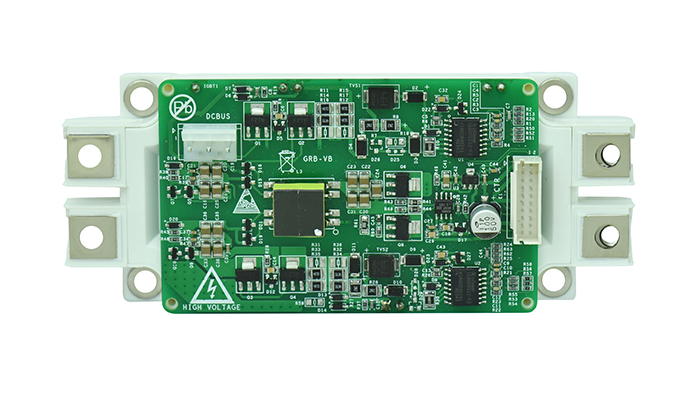
It is understood that IGBT (Insulated Gate Bipolar Transistor, insulated gate bipolar transistor) is a high-power power electronic device, mainly used in inverter and other inverter circuits to convert DC voltage into AC power with adjustable frequency, and is commonly known as the "CPU" of power electronic devices. IGBT is a core component for energy conversion and transmission. Utilizing IGBT for power conversion can enhance the efficiency and quality of electricity usage, and it is a key technology for addressing energy shortages and reducing carbon emissions.
On December 10th, BYD Company Limited (002594.SZ, hereinafter referred to as "BYD") released the IGBT4.0 technology. On the same afternoon, a reporter from China Business Journal visited Ningbo BYD Semiconductor Co., Ltd. and inspected the four important zones in IGBT manufacturing: the diffusion zone, the thin film zone, the yellow light zone and the etching zone. Wu Haiping, senior R&D manager of BYD's Sixth Business Division, told reporters that the current output capacity of IGBT4.0 is 15% higher than that of the mainstream IGBT in the current market. Under the same working conditions, the comprehensive loss of IGBT4.0 is approximately 20% lower than that of the current mainstream IGBTs in the market.
Regarding BYD's development in IGBT, Chen Gang stated that BYD established an IGBT R&D team as early as 2005 and acquired the Ningbo Zhongwei Semiconductor Wafer Factory in October 2008. "At present, BYD is the only Chinese automaker with a complete industrial chain: including IGBT chip design and manufacturing, module design and manufacturing, high-power device testing and application platforms, power supplies and electronic control systems, etc." "
In addition, Chen Gang introduced that BYD has invested heavily in the layout of the third-generation semiconductor material SiC(silicon carbide), which has more excellent performance, and is expected to launch electric vehicles equipped with SiC electronic control in 2019. It is expected that by 2023, all electric vehicles under BYD will be fully equipped with SiC electronic control systems.
It is understood that in the domestic market, only enterprises such as CRRC Times Electric and BYD have mastered the research and development and production of IGBTs. In the past two years, vehicle manufacturers such as SAIC and BAIC have begun to master relevant technologies through cooperation with other enterprises.
The international giants have a serious monopoly
As one of the mainstream new power electronic devices, IGBT is widely used in rail transit, smart grids, aerospace, electric vehicles, new energy equipment, and industrial fields (AC/DC conversion and frequency conversion control in high-voltage and high-current scenarios), and it is the core technology in the above applications.
However, data shows that the Chinese IGBT market has long been monopolized by international giants, with 90% of the share held by overseas giants such as Infineon and Mitsubishi. Zhou Shengming said that the largest import of a single product in China is chips, and there is a dependence on foreign products. However, such dependence is not advisable, especially when there is competition among products, the impact is even greater.
According to research by CITIC Securities, in 2017, the domestic IGBT market size in China was approximately 12.1 billion yuan, accounting for about 50% of the global total demand. However, China's IGBT industry started relatively late. The domestic market share is mainly monopolized by international giants, with a domestic production rate of only 11%. The degree of reliance on imports is relatively high, and there is huge space for domestic substitution.
There are relatively few domestic enterprises engaged in the research and development of IGBTs, which may be related to the high difficulty of IGBT research and production. A relevant technician from BYD stated that the IGBT chip is only the size of a human fingernail, but it is necessary to etch tens of thousands or even hundreds of thousands of microscopic structure circuits on it, which can only be viewed under a microscope.
In terms of IGBT chip design, there are more than ten parameters involved, and many of them are contradictory to each other. It is necessary to make compromises based on the application. In terms of wafer manufacturing processes, IGBTs using the latest 1200V FS technology need to be thinned to a thickness of 120um(approximately the diameter of two human hair strands), and then undergo more than ten processing procedures. The cleanliness requirements for wafer manufacturing plants are extremely high, and primary purification is needed. A tiny speck of dust a few tenths of a micrometer falling onto a wafer can cause an IGBT chip to fail. The above-mentioned technician said so.
In addition, the design of IGBT modules is also highly challenging, requiring consideration of multiple indicators such as material matching, heat dissipation, structure, power density, appearance, and weight.
Chen Gang said that the threshold for semiconductor research and development is relatively high and it cannot be done well merely by funds. The research and development process also requires the pull from downstream. If the upstream and downstream cannot communicate and integrate well, the products produced at a huge cost may not be suitable for the application end, resulting in the possibility of disconnection from the downstream. Yang Qinyao, the product director of BYD's Sixth Business Division, also told reporters that application-driven, talent cultivation and product standardization are the three key elements in IGBT production.
Compete in the IGBT market
Since 2018, the production and sales of new energy vehicles have exploded. From 2018 to 2020, the compound annual growth rate of China's new energy vehicle production is expected to exceed 40%, and the production of new energy vehicles in China is expected to reach 1 million in 2018.
The rapid development of new energy vehicles may drive the market growth of IGBTs. Chen Gang stated that IGBT and batteries are the two core technologies that currently restrict the development of electric vehicles, while chips are the core industry of modern manufacturing. It is reported that IGBT, as a core component of new energy vehicles, accounts for approximately 5% of the total vehicle cost.
According to TrendForce's analysis, during the period from 2018 to 2025, the IGBT market size driven by China's new energy vehicle and related industries will exceed 120 billion yuan in total. Among them, in 2025 alone, the market size of IGBTs used in China's new energy vehicles will reach 21 billion yuan. From 2018 to 2025, the cumulative new market size of IGBTs used in China's new energy vehicles exceeded 90 billion yuan.
However, at the same time, the growth rate of new energy vehicles may be significantly higher than that of automotive-grade IGBTs, leading to an increasingly tight supply of IGBTs. Judging from the current situation, according to the statistics of the delivery cycle of IGBT products in the first half of 2018 by Future Electronics LTD (one of the world's top three electronic component distributors), the delivery cycle of IGBT has been significantly extended and there is a trend of extension in the coming period.
Statistics show that, generally speaking, the delivery cycle of IGBTs is around 8 to 12 weeks. However, in the fourth quarter of 2017, the delivery cycle of most manufacturers has been extended to 18 to 20 weeks. By the first half of 2018, the average delivery cycle was extended to 20-26 weeks. The longest delivery cycle for IGBT modules applied in automobiles was 52 weeks. The supply cycles of major IGBT product suppliers such as Infineon, ON Semi, and IXYS all showed an extension phenomenon.
Guojin Securities analyzed that it is expected that in 2022 alone, the global annual production and sales volume of new energy vehicles will reach 6 million units, with a compound annual growth rate of 30% from 2018 to 2022. However, the compound annual growth rate of the automotive-grade IGBT market during the same period was only 15.7%.




 快发智造
快发智造


